ICD 10-CM

About ICD 10-CM

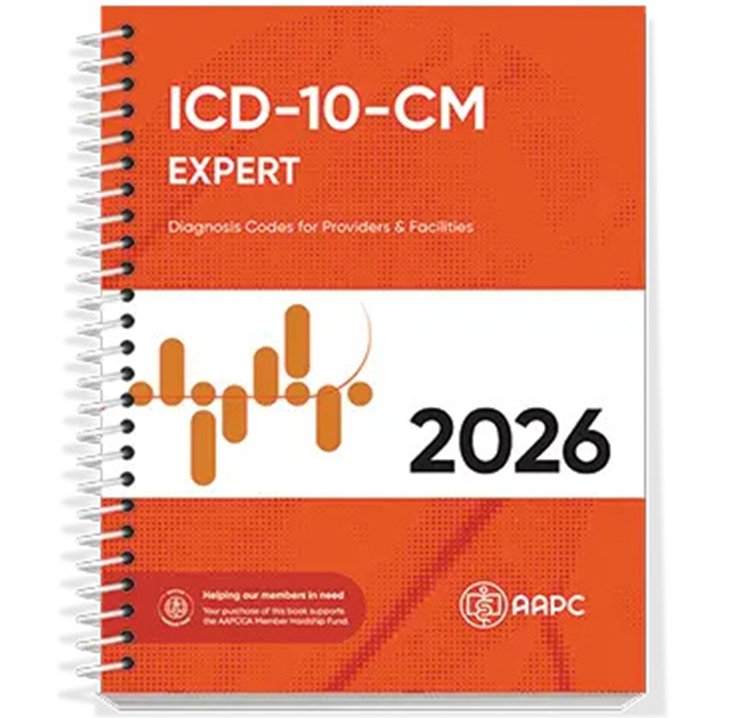
ICD 10-CM (International Classification of Diseases, Tenth Revision, Clinical Modification) is the official system in the United States for classifying medical diagnoses and health conditions into standardized alphanumeric codes. It is used by all entities covered by HIPAA, including hospitals, clinics, and insurance companies, to report and track a vast range of health data, such as symptoms, injuries, diseases, and social circumstances.

Here's a breakdown of the acronym

Structure of an ICD 10-CM code

First character

Always an alphabet letter, representing the chapter where the code is categorized (e.g., ‘S’ is for injuries).

Second and third characters

Always numeric, defining the specific condition or disease within the chapter’s

Fourth to sixth characters

Can be alphanumeric and provide clinical details such as the specific anatomical site, etiology, or severity.

Seventh character (extension)

Used in certain sections to add more information, such as the episode of care for an injury

A placeholder character

‘X’, is used to fill in spaces if a code is fewer than six characters but requires a seventh.

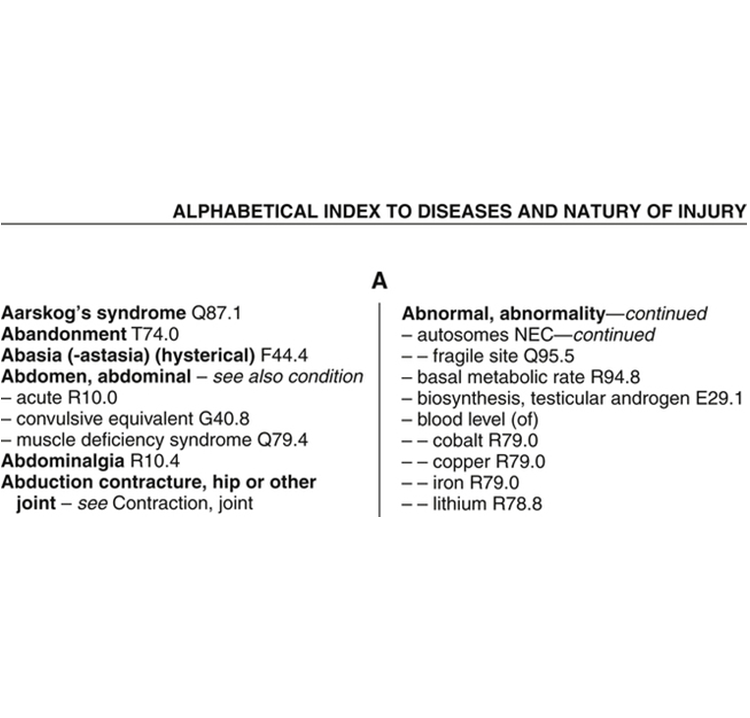
ICD 10-CM Alphabetical Index

Purpose: To quickly find the correct code for a disease, injury, or condition by looking up its name.

Structure: Lists main terms in alphabetical order, with sub-terms providing more specific details. For example, under “Cataract,” you’d find a list of specific types of cataracts.

Use: You look up the term here first to find a potential code or related terms.

Limitations: It does not contain coding instructions, only the terms themselves.

ICD 10-CM Tabular List

Purpose: To provide the full code, along with important details, coding instructions, and context.

Structure: Organized into chapters (e.g., Chapters 1-22) based on body systems, diseases, or other conditions, with codes listed alphanumerically from A00.0 to Z99.89.

Use: After finding a potential code in the Index, you must go to the Tabular List to.

Verify: the code’s accuracy and descriptor.

Confirm: coding instructions, inclusions, and exclusions.

Locate: any required 7th character or placeholder.

Key Principles of ICD 10-CM Coding

Start with the Alphabetical Index: Always begin by locating the diagnosis or reason for the encounter in the Alphabetical Index.
Verify in the Tabular List: After identifying a code in the index, you must always verify it in the Tabular List to confirm its accuracy and ensure all necessary additional characters or instructions are followed.
Use Highest Level of Detail: ICD 10-CM codes should be assigned with the highest number of characters available to fully describe the diagnosis.
Review for Instructional Notations: Pay close attention to instructional notes in the Tabular List, such as “use additional code,” “code first,” “code also,” and “see” or “see also”.
Utilize Combination Codes: Assign combination codes when available to fully describe a condition.
Use External Cause and Activity Codes: External cause codes (including activity codes from Category Y93) may be required to provide additional information about how the injury or condition occurred.
Placeholder Character “X”: Use the placeholder character “X” for required characters when the code does not have enough existing characters to reach the necessary length.

Learn at your own pace, with lifetime access on mobile and desktop

We offer weekend classes and night batches to help working students learn Medical Coding without disrupting their job schedules.

Book For Free Demo

Code Easy is an exclusive online platform providing high-quality Medical Coding training in the simplest and most effective way. We offer flexible class hours in multiple languages, guided by certified and experienced mentors.

Copyright © 2025 Codeeasy All rights reserved | Developed & Managed By UltraGITS.