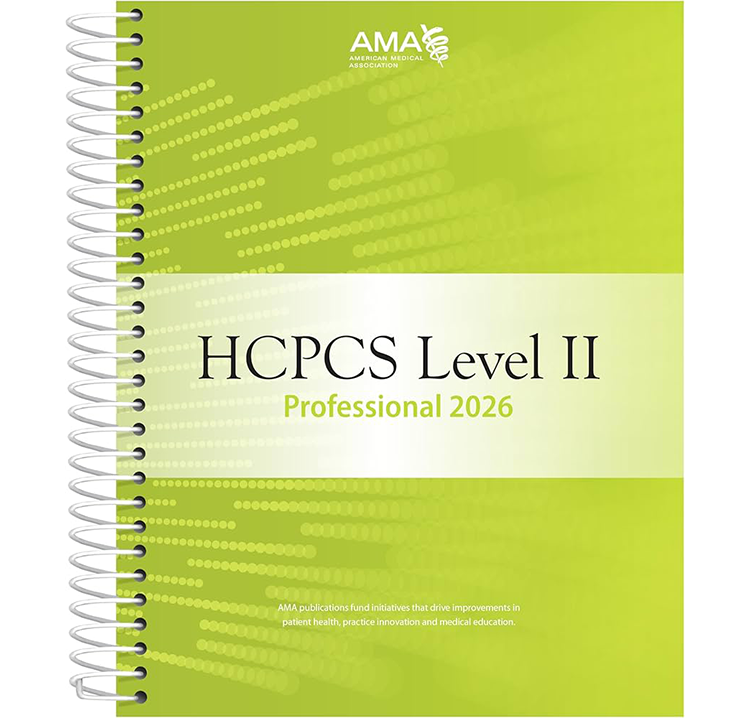
HCPCS (Healthcare Common Procedure Coding System) is a standardized coding system used by medical billers and coders to describe medical procedures, supplies, products, and services for which they submit claims to insurers. It was established by the Centers for Medicare & Medicaid Services (CMS) in 1978 to ensure that government health insurance programs, such as Medicare and Medicaid, processed claims consistently and orderly. HCPCS is a two-tiered system.
This level consists of the American Medical Association’s (AMA) Current Procedural Terminology (CPT) codes, a set of five-digit numeric codes for reporting medical services and procedures performed by physicians and other healthcare professionals.
These alphanumeric, five-character codes were developed by CMS to cover items and services not included in the CPT codes, including ambulance services, durable medical equipment (DME), prosthetics, orthotics, and supplies (DMEPOS). Each code starts with an alphabet letter followed by four numeric digits, with the letter grouping similar items together (e.g., ‘J’ codes represent injectable drugs).

Medical coders use HCPCS Level II codes in conjunction with CPT and ICD-10-CM codes to submit claims. In general terms, the HCPCS Level II code reports “what the provider used,” the CPT code reports “what the provider did,” and the ICD-10-CM code reports “why the provider did and used”.
A patient sees a physician (requiring a CPT code) for a specific diagnosis (requiring an ICD-10-CM code) and needs a wheelchair after the visit. The wheelchair is covered by a specific Level II HCPCS code that starts with the letter E for durable medical equipment. For instance, a claim might include:
We offer weekend classes and night batches to help working students learn Medical Coding without disrupting their job schedules.
WhatsApp us